teacher life
Parent communication: the underrated half of teaching
I spent more hours emailing parents than I did marking. Here is the structure I eventually used, why "more communication" is the wrong goal, and what good parent comms actually looks like.
 Enzo · June 23, 2026 · 9 min read
At my first international school in Hanoi, I kept a private spreadsheet of how long each part of my job took. After the first term I added the numbers up. The honest answer surprised me: I was spending more hours on parent emails than I was on marking. The margin wasn't huge, but it was enough that "marking is the bottleneck" stopped being true the moment I looked at it. The bottleneck was the inbox.
I have since talked to enough teachers to know this isn't a Hanoi-specific problem. Parent communication is the most under-discussed pillar of teaching workload, and it's the one where the temptation to fix it by "communicating more" makes things actively worse. This post is the version of what I figured out across four countries, and what I'd build a parent-comms practice around if I were starting again.
Why this eats so much time
Two reasons, both real. First, parent comms doesn't show up in any standard time-allocation framework. Teacher contracts list teaching hours, planning hours, and "directed time," but no school I've seen explicitly costs in parent communication. So when teachers report being overworked, the discussion goes to marking and lesson planning. Parent comms hides inside "directed time" and gets absorbed.
Second, parent comms is the last task you can defer. A late lesson plan you can fix with improvisation. A late grade, you can apologise for. A late reply to a parent email, especially in a fee-paying international-school context, is a complaint waiting to land. The asymmetric cost means you handle parent comms when it arrives, not when you have time, and the residual time available for everything else compresses.
The Harvard Graduate School of Education's Global Family Research Project (formerly Harvard Family Research Project) has been writing about this asymmetry for over a decade. Their working frame is that family-school engagement is most effective when it's specific, frequent, and two-way, and that volume alone doesn't move outcomes. That's the part teachers tend to get wrong. We default to volume because it's easier to measure than specificity.
The shape of parent comms in international schools specifically
If you teach in an international school, your inbox is structurally different from a domestic colleague's. The OECD's TALIS 2024 results showed wide variation across systems in how often teachers communicate with parents and the formality of that communication, with international and high-fee environments tending toward higher frequency than national norms. That's the polite version. The teacher version is: parents pay, parents expect to know, and the response-time clock starts the moment the email lands.
On top of that, you may be communicating across two or three home languages. Not in the sense of using Google Translate, that's the easy part, but in the sense of cultural register. The same sentence about a student's progress reads different to a Korean parent than to a Brazilian parent than to a German parent. The cultural- translation work is invisible labour. It's also unavoidable.
The weekly-update template that finally worked
After a lot of trial and error I converged on a single template I used for almost every parent email that wasn't a crisis. Subject line plus four short paragraphs.
- Subject line. "[Student name], week ending [date]." Not "Update," not "Quick note." The student's name in the subject line filters parent inboxes for them and signals this is about their child specifically, not a class-wide newsletter.
- Paragraph 1: One specific thing the student did well this week. A real example, not "she had a great week." "In our writing workshop, Maria rewrote the second paragraph of her essay after I pointed out the topic sentence was unclear, and the revised version is genuinely better."
- Paragraph 2: One thing they're working on. Not "needs improvement" but "currently working on." "She's currently working on transitioning between paragraphs, particularly when introducing a counterargument."
- Paragraph 3: One concrete thing the parent can do. Optional. "If you're reading something at home this week, you might ask her how the writer moves between ideas. That's the muscle we're building right now."
- Paragraph 4: A one-line close. "Happy to chat more if useful, no need to reply unless you'd like to."
The whole email is six sentences. It can be written in seven minutes. It is specific, specific to this student, this week, this skill. It cannot be confused with any other student's email. That's the quality bar, and it's the bar that actually moves the parent relationship.
"More communication" is the wrong goal
The instinct, when parent comms feels like it's eating the week, is to do less. The opposite instinct, common in international schools, is to do more, more frequently, more newsletters, more "transparent updates." Both miss what actually works.
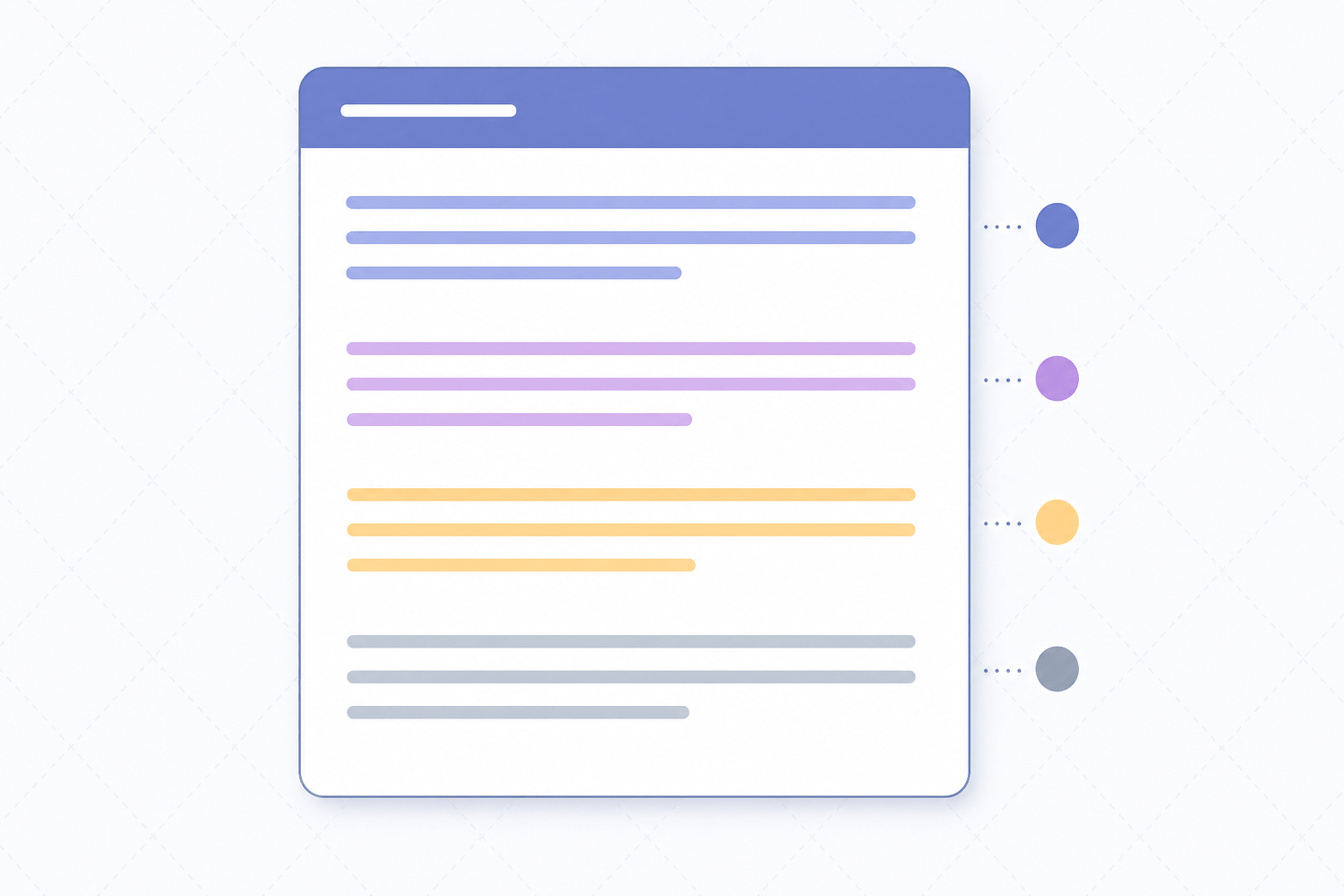
The published assessment-and-feedback literature is consistent on a single point: what improves the family-school relationship is per-student specificity, not per-school frequency. A weekly newsletter to all parents is, from each individual parent's perspective, mostly noise. A bi-weekly six-sentence email about their child is signal. Open rates, response rates, and downstream parent satisfaction all move with specificity, not volume.
That's the part that changes how you spend the time. Instead of trying to write more general updates, you write fewer but per-student emails. Same total time, far better outcomes.
What's actually hard about doing this consistently
The structural challenge is that to write a per-student email every two weeks for every student in every class, you need to remember something specific about each student in each window. Across five classes of thirty students each, that's 150 students, each remembered every fortnight. Nobody can do that from memory.
The teachers I know who pull this off without burning out have one practice in common: they keep notes. A spreadsheet. A small notebook. A column in their gradebook. At the end of each lesson, they jot one observation per student who stood out, good or bad. Over a fortnight, every student lands in the notes at least once. The email comes from the notes, not from memory.
It's a small habit and it's the difference between sustainable per-student communication and the spiral where you eventually default to "Amaya is doing well" for the third email in a row.
Where AI will, and won't, help
I want to be careful here because the temptation to "automate parent comms" is the wrong temptation. A generic AI-written email about a student gives you the same problem as a generic teacher-written email: parents notice, and the relationship dies a little.
Where AI does help is in the specificity-from-data direction. If you have a gradebook with per-question scores, AI can draft a specific email by reading the scores and surfacing what stood out. That's templating-with-data, not templating-without-data. The output reads as personal because it is personal, anchored to actual student-specific evidence, not a generic phrase generator.
That's the future I'm working toward in Grade Coach: not auto-writing parent emails, but giving teachers the per-student data structured cleanly enough that drafting a six-sentence email takes thirty seconds instead of seven minutes. The specificity is already there in your gradebook. AI's job is just to surface it.
Three changes you can make this term
- Pick a fortnightly cadence. A six-sentence email about each student every 2 weeks is sustainable for most teaching loads and lands well with parents.
- Take per-student observation notes after each lesson. Even one line. Even just for the kids you noticed. The notes are the fuel for the email. Without them, you'll default to generic.
- Drop the all-class newsletter, or keep it monthly only. The general newsletter is the lowest-signal communication you produce. Replace its weekly slot with the per-student rotation and you'll spend the same hours on dramatically more useful work.
Parent communication is not a side task. For most teachers it's the second-largest time pillar in the job. Treating it as if it's a single email at a time is what makes it feel impossible. Treating it as a structured practice, with a template, a cadence, and a note-taking habit, is what makes it survivable.
Sources cited above: Harvard Graduate School of Education, Global Family Research Project (institutional source); OECD TALIS 2024 results on teacher-parent communication frequency. The template, cadence, and per-student-notes practice are from a decade of my own classroom experience across four countries; if you have published research on per-student-specificity outcomes I'd love to hear about it via the contact form.